
Make your journey easier

VR Simulator
Here we have Virtual Reality Simulator for your Safeties and to improve your Expriences
Prepare to enter permit-required confined space
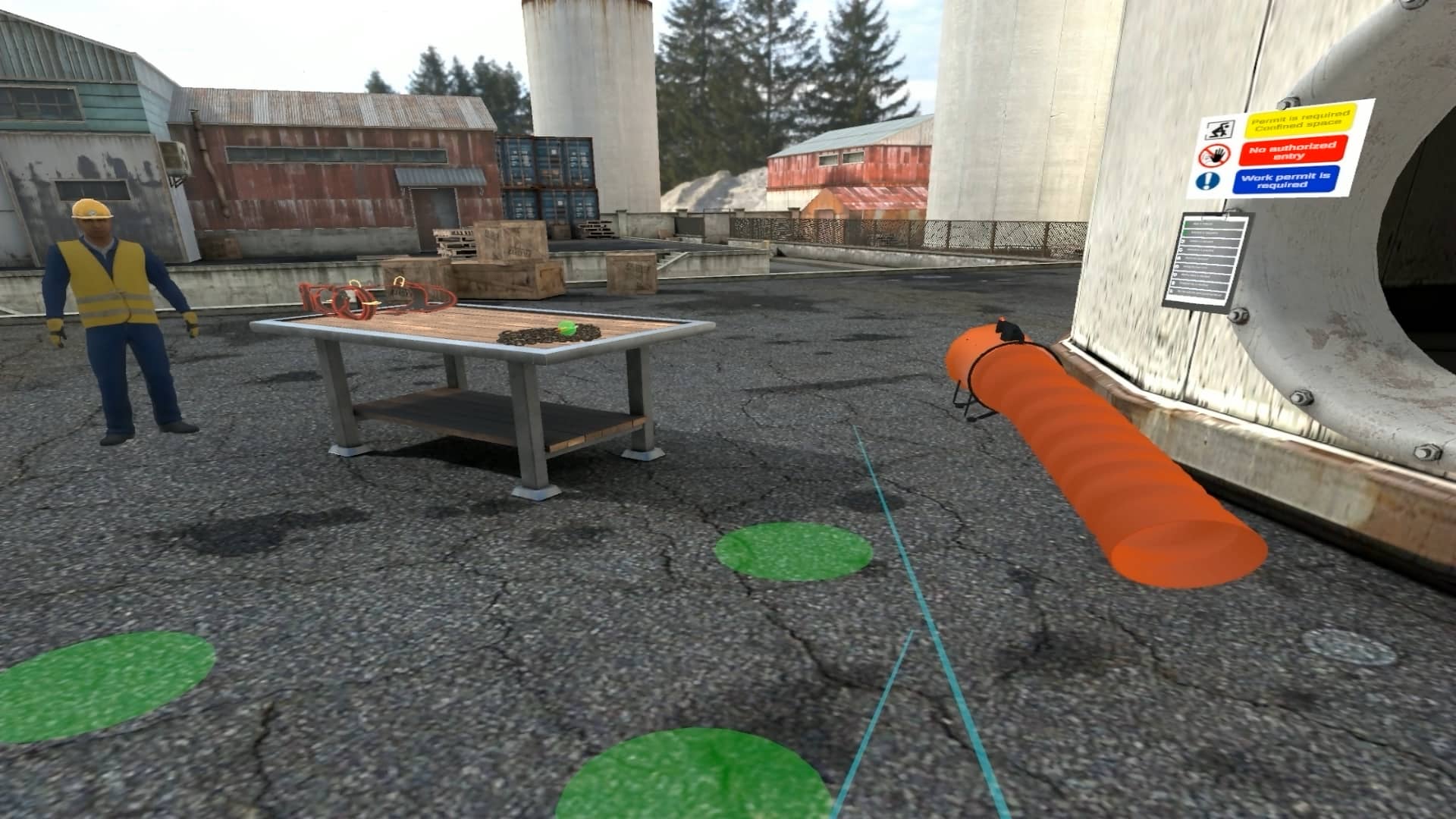
Confined Space Entry VR Training will recreate preparation to enter permit-required confined
space, will teach you which warning signs should be used, how to perform atmospheric testing
before entering a confined space, and how to work with your colleagues to make work safer.
SinglePlayer or Multiplayer
 Single Player
Single Player
Category
Workplace Safety, Construction
Workplace Safety, Construction
Headset Compatible With
HTC Vive focus 3, Oculus quest 2, Pico Neo 3, PC VR
HTC Vive focus 3, Oculus quest 2, Pico Neo 3, PC VR
What You'll Learn
Confined Space VR training will recreate preparation to enter permit-required confined space,
will teach you which warning signs should be used, how to perform atmospheric testing before
entering a confined space, how to work with your colleagues to make work safer. You will
learn to use additional equipment during the training: ventilation and valve locking devices
(LOTO). Training consists of 3 modes: Study, Training, Exam that provide step-by-step control
of all VR activities. Voice-over and visual guides included. The training is based on the
following standards: NEBOSH, ISO 45001, Standard of Operating Management System (OMS) for the
oil and gas industry by International Association of Oil & Gas Producers (IOGP).
The VR Experience
In this training user must prepare for entering the confined space. The assessment takes
place at the empty oil storage tank. Training starts with the work permit, putting the
warning signs, providing gas-test with the proper equipment, and locking and tagging all
the equipment connected to the confined space. After that the user will have to organize
ventilation of the confined space, and communicate with the colleagues to set the observers
and belayers roles. After that the user will put the harness on, connect it to the cable,
and check the walkie-talkie. The final steps will be signing the enter permit and double
check all the safety measures.
Here's a trailer of how it works
Prepare and disconnect the cell on high-voltage switchgear safely
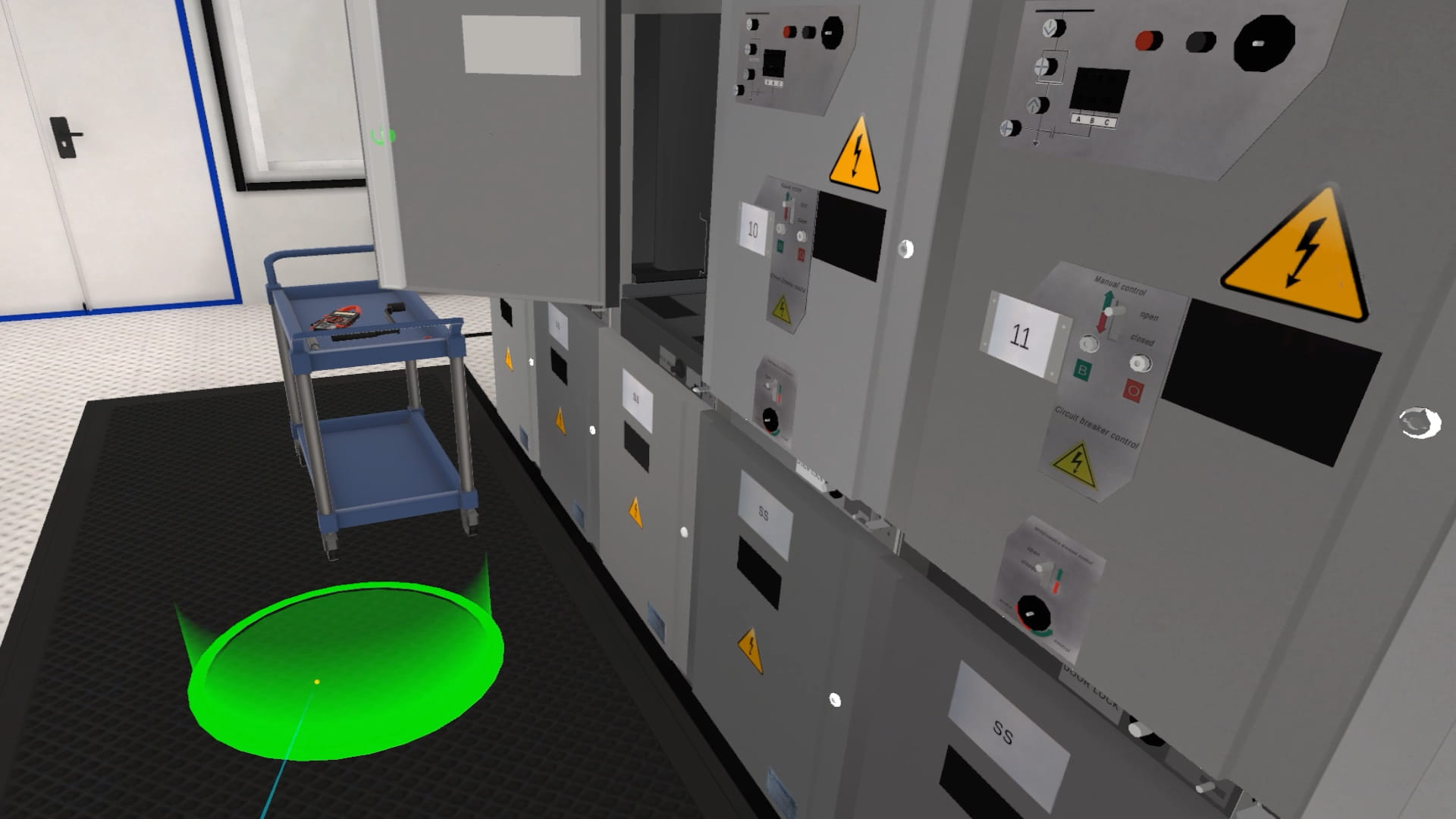
In the VR simulator, you will learn how to prepare for the work on switchgear, put on the
necessary PPE, check the work permit, prepare the tools, prepare the equipment,
disconnect and remove the switchgear cell.
SinglePlayer or Multiplayer
Single Player
Single Player
Category
Workplace Safety, Energy + Utilities
Workplace Safety, Energy + Utilities
Headset Compatible With
HTC Vive Focus 3, Oculus quest 2, Pico Neo 3, PC VR
HTC Vive Focus 3, Oculus quest 2, Pico Neo 3, PC VR
What You'll Learn
In the VR simulator, you will learn how to prepare for the work on switchgear, put on the
necessary PPE, check the work permit, prepare the tools, prepare the equipment, disconnect
and remove the switchgear cell, move the cell and the tools to the repair point and finish
the task with the foreman. The simulator complies with international standards and contains
all the intermediate steps and tools for performing work.
The VR Experience
The training will start with taking and signing the work permit and putting on the necessary
PPE. After that you will collect the tools needed for the task and transport them on the cart
to you task location. When you are near the switchgear you will have to provide all the
procedure for the safe disconnection of the cell. It includes placing the warning signs,
checking the voltage, shutting down the equipment part by part, and using different keys and
tools. After the shutdown, you will use special cart to withdraw the cell and move it away
from the container.
Here's a trailer of how it works
_1366x768-min.png)
Prepare for the real-life situation of the fire on the electrical equipment
In the VR simulator you will have to call the fire brigade by phone, conduct evacuation
according to the evacuation plan, turn on the manual fire alarm, follow the escape routes
according to the signs and use a fire extinguisher in accordance with the operating rules.
SinglePlayer or Multiplayer
Single Player
Single Player
Category
Workplace Safety, First Responders, Workplace Emergency Training
Workplace Safety, First Responders, Workplace Emergency Training
Headset Compatible With
HTC Vive Focus 3, Oculus quest 2, Pico Neo 3, PC VR
HTC Vive Focus 3, Oculus quest 2, Pico Neo 3, PC VR
What You'll Learn
In the VR simulator you will have to call the fire brigade by phone, conduct evacuation
according to the evacuation plan, turn on the manual fire alarm, follow the escape routes
according to the signs and use a fire extinguisher in accordance with the operating rules.
You will learn how to behave in a critical situation, help your co-workers and deal with fire.
The VR Experience
In the VR simulator you will go through all the fire-preventing measures and study them:
evacuation plan, fire-exits, fire-alarm buttons, fire extinguisher. Then you get into the
situation of fire. You will have to immediately stop working and call the fire brigade by
phone (indicating the address of the organization, name of the organization, fire origin
point, last name, first name, patronymic, phone number), conduct evacuation according to the
evacuation plan, turn on the manual fire alarm, follow the escape routes according to the
signs and use a fire extinguisher in accordance with the operating rules. The situation takes
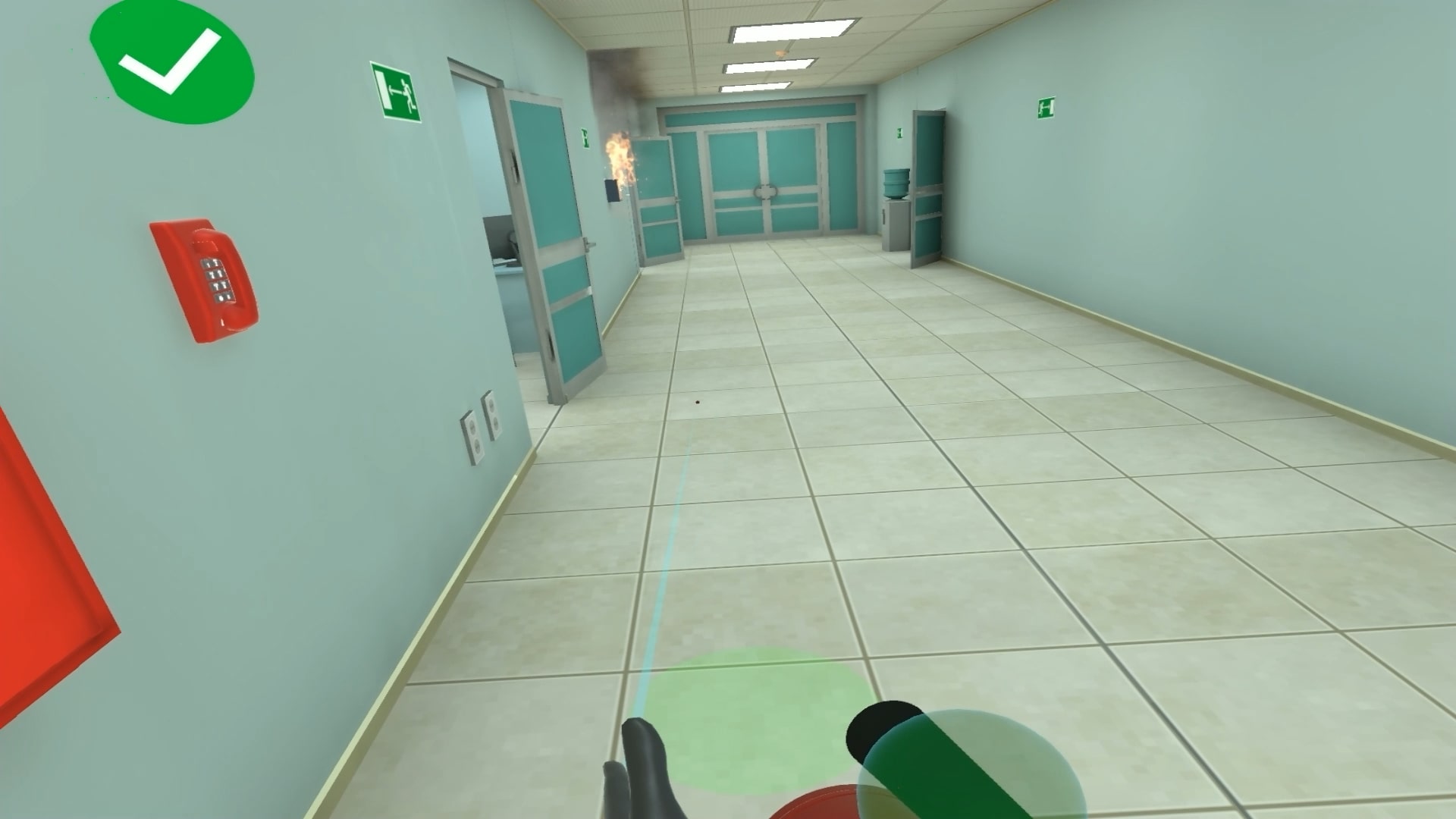
place in an office building.
Here's a trailer of how it works
_1366x768-min.png)
Prepare for the real-life situation of the fire on the electrical equipment
In the VR simulator you will have to call the fire brigade by phone, conduct evacuation
according to the evacuation plan, turn on the manual fire alarm, follow the escape routes
according to the signs and use a fire extinguisher in accordance with the operating rules.
SinglePlayer or Multiplayer
Single Player
Single Player
Category
Workplace Safety, First Responders, Workplace Emergency Training
Workplace Safety, First Responders, Workplace Emergency Training
Headset Compatible With
HTC Vive Focus 3, Oculus quest 2, Pico Neo 3, PC VR
HTC Vive Focus 3, Oculus quest 2, Pico Neo 3, PC VR
What You'll Learn
In the VR simulator you will have to call the fire brigade by phone, conduct evacuation
according to the evacuation plan, turn on the manual fire alarm, follow the escape routes
according to the signs and use a fire extinguisher in accordance with the operating rules.
You will learn how to behave in a critical situation, help your co-workers and deal with fire.
The VR Experience
In the VR simulator you will go through all the fire-preventing measures and study them:
evacuation plan, fire-exits, fire-alarm buttons, fire extinguisher. Then you get into the
situation of fire. You will have to immediately stop working and call the fire brigade by
phone (indicating the address of the organization, name of the organization, fire origin
point, last name, first name, patronymic, phone number), conduct evacuation according to the
evacuation plan, turn on the manual fire alarm, follow the escape routes according to the
signs and use a fire extinguisher in accordance with the operating rules. The situation takes
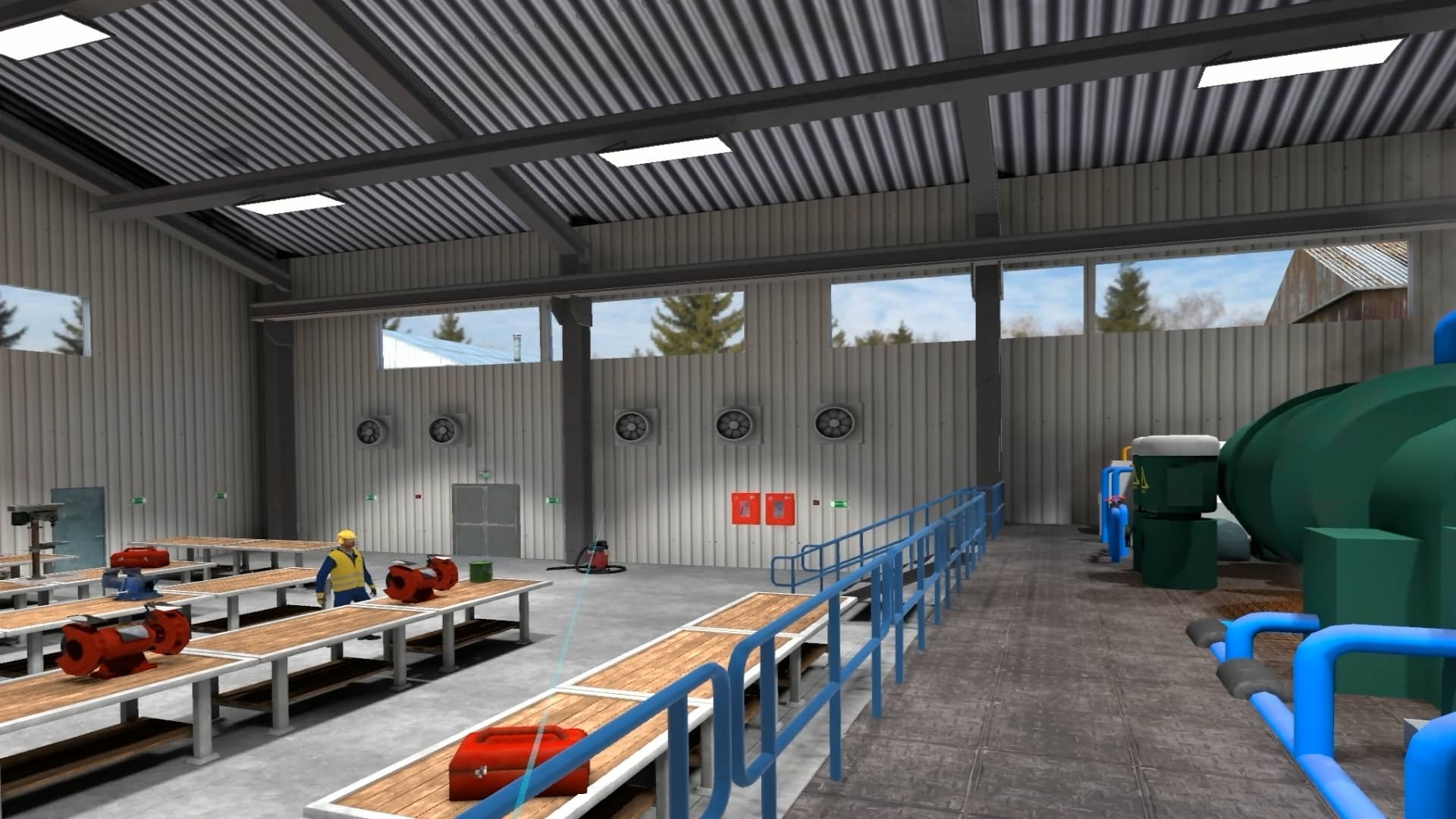
place in the workshop.
Here's a trailer of how it works
-min.jpg)
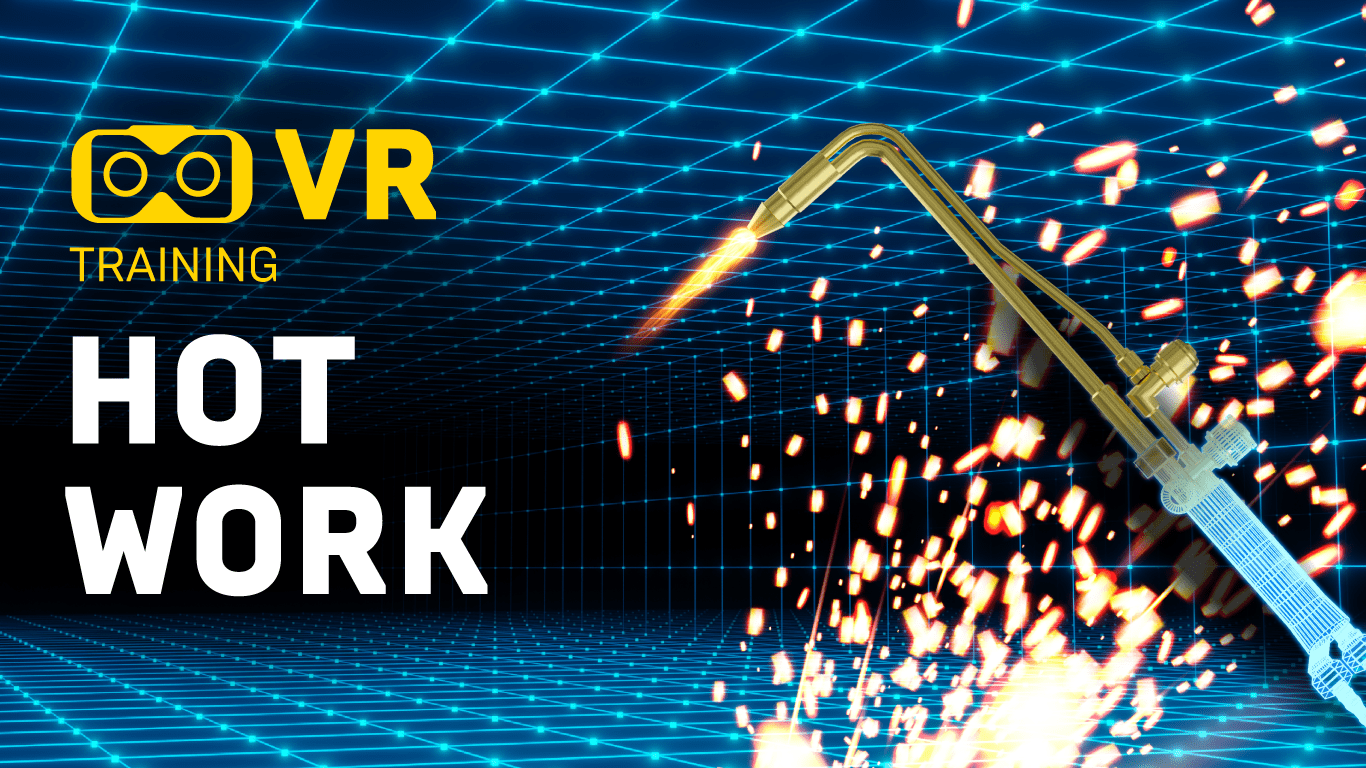
Prepare for the hot work operations safely
During the training stages, the user will need to complete tasks from the supervisor:
undergo a briefing, put on the necessary PPE, check the work permit, check the
availability of the Basics of Fire Safety certificate and a qualification certificate,
analyze the gas-air environment and much more.
SinglePlayer or Multiplayer
Single Player
Single Player
Category
Workplace Safety, Construction
Workplace Safety, Construction
Headset Compatible With
HTC Vive Focus 3, Oculus quest 2, Pico Neo 3, PC VR
HTC Vive Focus 3, Oculus quest 2, Pico Neo 3, PC VR
What You'll Learn
In the VR simulator, you will ensure a number of safety measures before starting work. The
team will consist of 1 supervisor and 4 employees. During the training stages, the user will
need to complete tasks from the supervisor: undergo a briefing, put on the necessary PPE,
check the work permit, check the availability of the Basics of Fire Safety certificate and a
qualification certificate, protect the dangerous area of hot work, analyze the gas-air
environment etc. The training is based on the following standards: NEBOSH, ISO 45001,
Standard of Operating Management System (OMS) for the oil and gas industry by International
Association of Oil & Gas Producers (IOGP).
The VR Experience
The user will start from showing his access documents to the supervisor. After that the user
will put on PPE and check all the tools for any damage possible. Our VR training provides
random damages on the equipment that makes training unique. Then the user will tape the
perimeter and put on the warning signs. Also, the user will analyze the gas-air environment;
remove all explosive and flammable equipment from the hot work location. After the double
check all the measures you are set for the hot work.
Here's a trailer of how it works
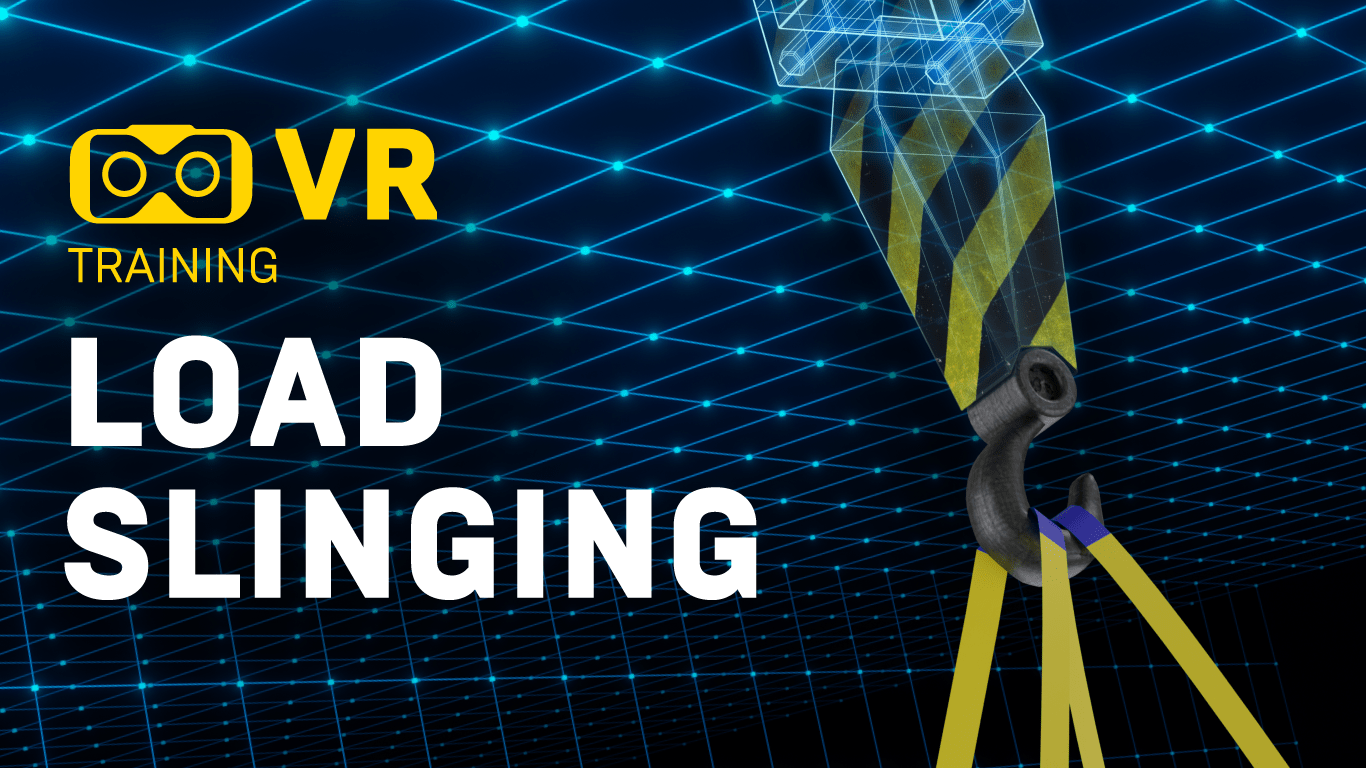
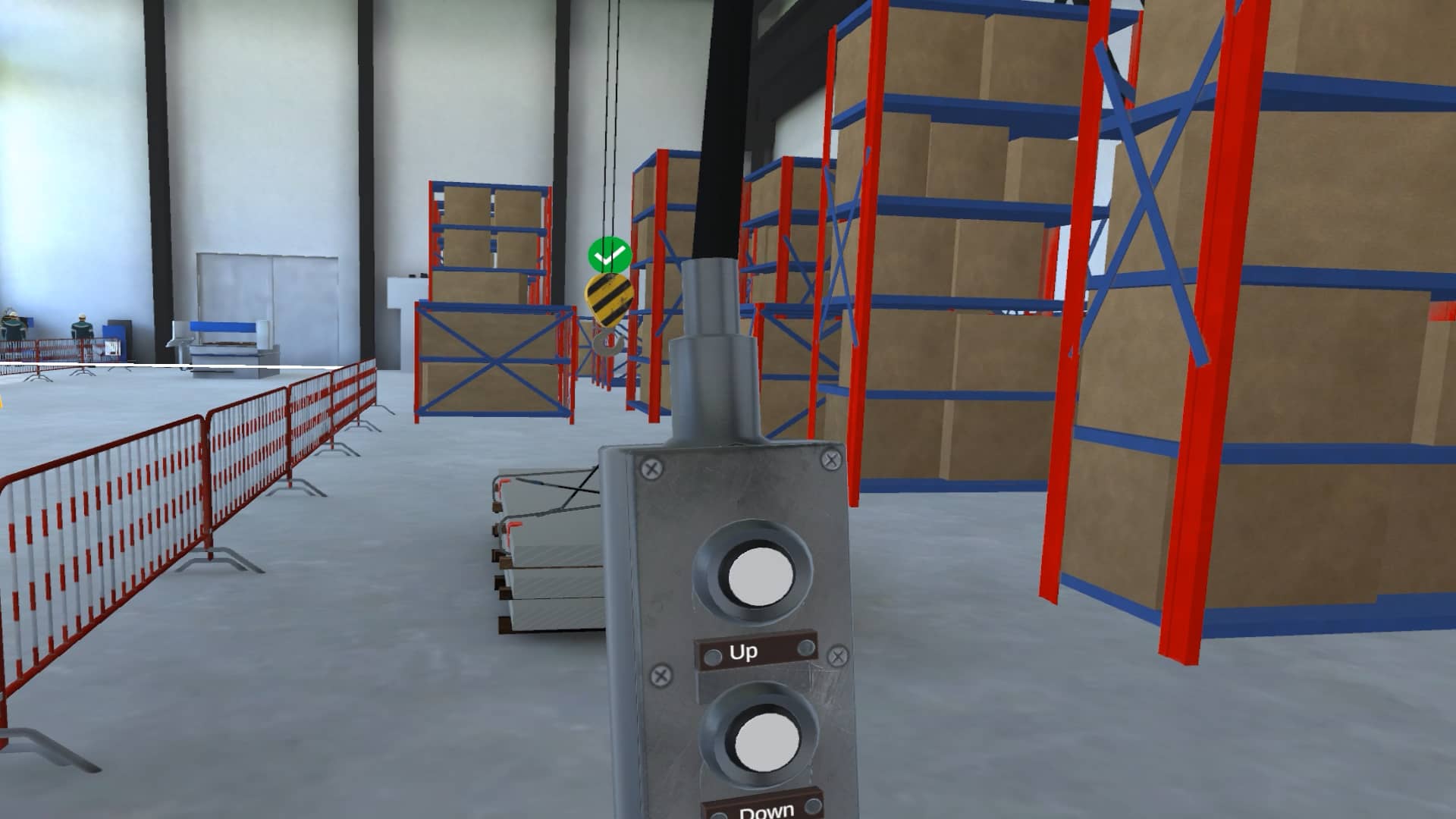
Move the load with the proper slinging and safe measures
In the VR simulator, you will learn how to choose the right type of slinging, depending
on the work permit task, which describes: the weight of the load, the dimensions of the
load and the load capacity of the slings (your choice of textile or iron). After that you
will have to move the load to the specified location.
SinglePlayer or Multiplayer
Single Player
Single Player
Category
Workplace Safety, Construction
Workplace Safety, Construction
Headset Compatible With
HTC Vive Focus 3, Oculus quest 2, Pico Neo 3, PC VR
HTC Vive Focus 3, Oculus quest 2, Pico Neo 3, PC VR
What You'll Learn
In the VR simulator, you will learn how to choose the right type of slinging, depending on
the process routing, which describes: the weight of the load, the dimensions of the load and
the load capacity of the slings (your choice of textile or iron). You will learn how to
properly hook, wrap around and install the slings for the load, make an initial lift to a
height of no more than 200-300mm for spontaneous lowering of the load, and then move the load
using the remote control around the hangar. The training is based on the following standards:
NEBOSH, ISO 45001, Standard of Operating Management System (OMS) for the oil and gas industry
by International Association of Oil & Gas Producers (IOGP).
The VR Experience
The assessment takes place inside large industrial storage location. The user will need to
take and read work permit, understand the details and the method of slinging for the task.
After that the user will have to set up the warning signs and tape the perimeter. Next step
will be to identify damaged tools and put them in a box, and then find the good ones that are
suitable for the task. Next steps will be checking the cat-head hook, detailed process of
slinging, and the movement of a large pack of metal sheets to the desired location.
Here's a trailer of how it works
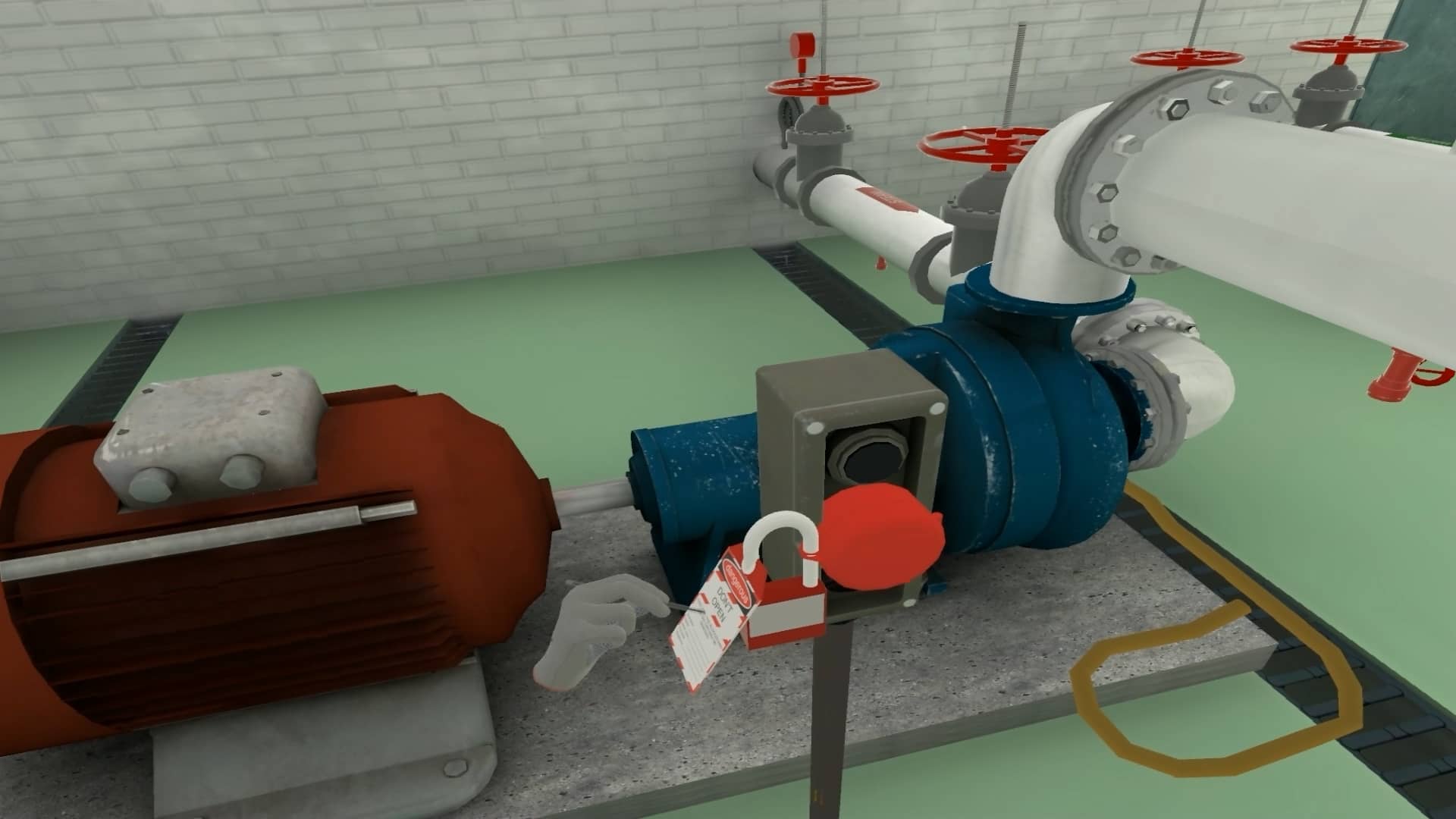
Lockout tagout the equipment safely
In the VR simulator, you will learn how to physically isolate electrical and hydraulic
hazardous energy in the corresponding equipment using the LOTO tools.
SinglePlayer or Multiplayer
Single Player
Single Player
Category
Workplace Safety, Energy + Utilities
Workplace Safety, Energy + Utilities
Headset Compatible With
HTC Vive Focus 3, Oculus quest 2, Pico Neo 3, PC VR
HTC Vive Focus 3, Oculus quest 2, Pico Neo 3, PC VR
What You'll Learn
In the VR simulator, you will learn how to physically isolate electrical and hydraulic
hazardous energy in the corresponding equipment using the LOTO tools, namely: installing
blocker on the system, then a lock with an individual key for the user and installing a tag
with a signature, date and an indication of the work being carried out. The simulator
complies with international standards and contains all the intermediate steps and tools for
performing work. The training is based on the following standards: NEBOSH, ISO 45001,
Standard of Operating Management System (OMS) for the oil and gas industry by International
Association of Oil & Gas Producers (IOGP).
The VR Experience
The training starts with the work permit checklist and access to the locking station with the
help of the master key. Then you will prepare and switch off the electrical pump, check if it
is off, and starting the lockout tagout process. According to the scheme and the signs on the
pipes you will move in the building, locking and checking the pressure in the pipes, until
the needed part of the pipeline will be safely cut off with locks and tags. Finally you will
bring and lock all the keys in the locking station and pass the master key to your superviser.
Here's a trailer of how it works
2022-06-09-20-11-29]-min.JPG)
Move and prepare for work at height safely
In the VR simulator, you will prepare for work at height, collect tools, climb to height
with different fall protection systems, move at height with different modes, stop the
unsafe behavior of other employees.
SinglePlayer or Multiplayer
Single Player
Single Player
Category
Workplace Safety, Construction
Workplace Safety, Construction
Headset Compatible With
HTC Vive Focus 3, Oculus quest 2, Pico Neo 3, PC VR
HTC Vive Focus 3, Oculus quest 2, Pico Neo 3, PC VR
What You'll Learn
In the VR simulator, you will prepare for work at height, collect tools, climb to height with
different modes of insurance, move at height with different modes, and stop the unsafe
behavior of other employees. The work is carried out on the tank, where additional
scaffolding will be installed on the roof, and safety equipment for the user's insurance.
The work will use a closed type ladder and a mobile ladder. The training is based on the
following standards: NEBOSH, ISO 45001, Standard of Operating Management System (OMS) for the
oil and gas industry by International Association of Oil & Gas Producers (IOGP).
The VR Experience
The assessment starts at the oil storage in the desert. You will prepare for work at height
communicating with you co-worker, taping the perimeter, putting the warning signs, collecting
the tools, check and put on the safe harness. After that you will climb on the construction
using self-locking hooks, providing all the safety measures while climbing. You will have to
change you methods when meeting the different situation on your way. In the end you will
interact with the colleagues to protect them, use the ladder, stop the unsafe behavior and
collect the unused tools on location.
Here's a trailer of how it works
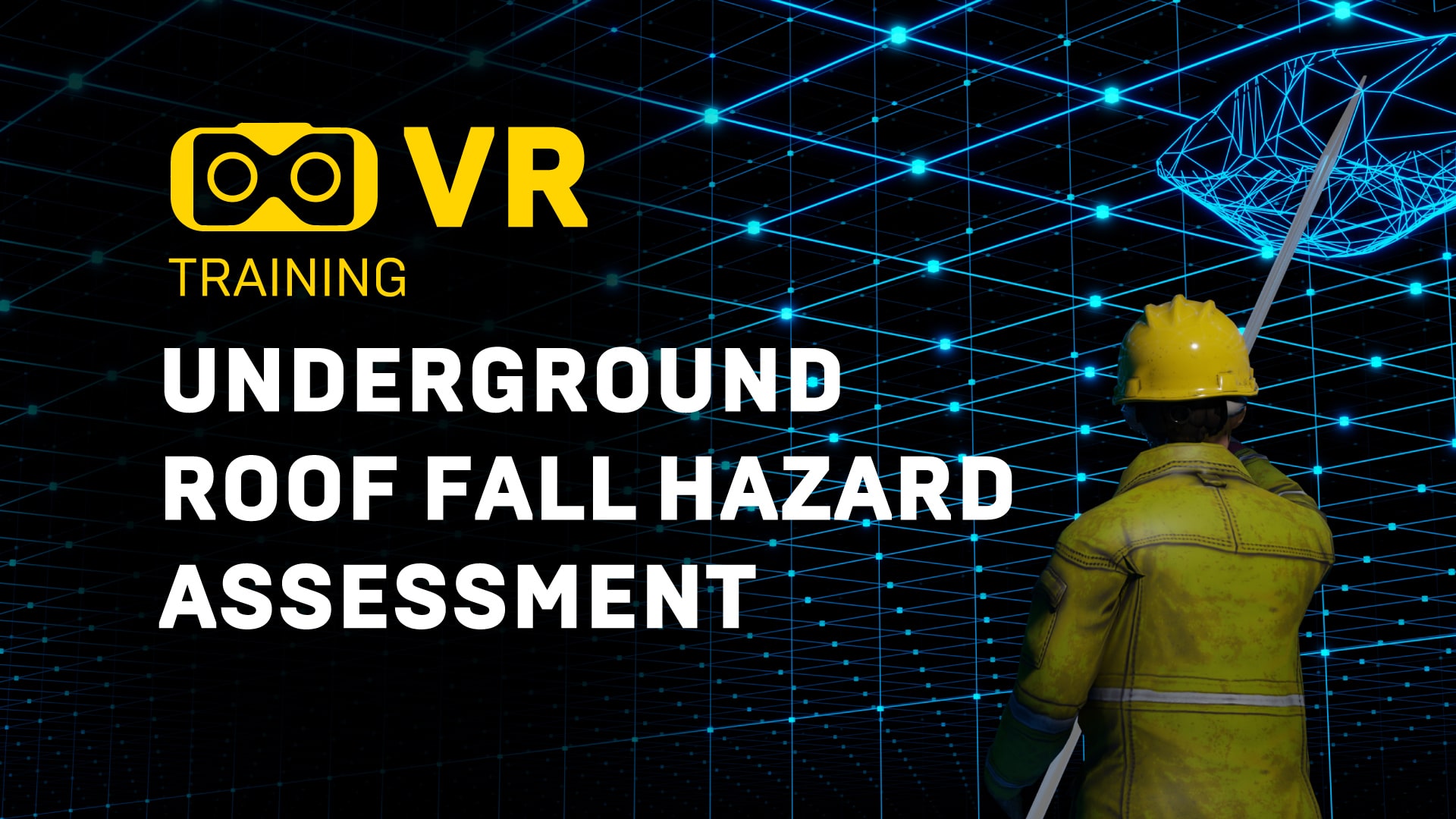
Identify hazards around a tunnel face and make your work safe
This training will take you underground to investigate the area and determine whether or
not further ground support measures are necessary. You willl use tool to remove hazards
or communicate with co-workers, when you need assistance.
SinglePlayer or Multiplayer
Single Player
Single Player
Category
Workplace Safety, Construction, Workplace Emergency Training
Workplace Safety, Construction, Workplace Emergency Training
Headset Compatible With
HTC Vive Focus 3, Oculus quest 2, Pico Neo 3, PC VR
HTC Vive Focus 3, Oculus quest 2, Pico Neo 3, PC VR
What You'll Learn
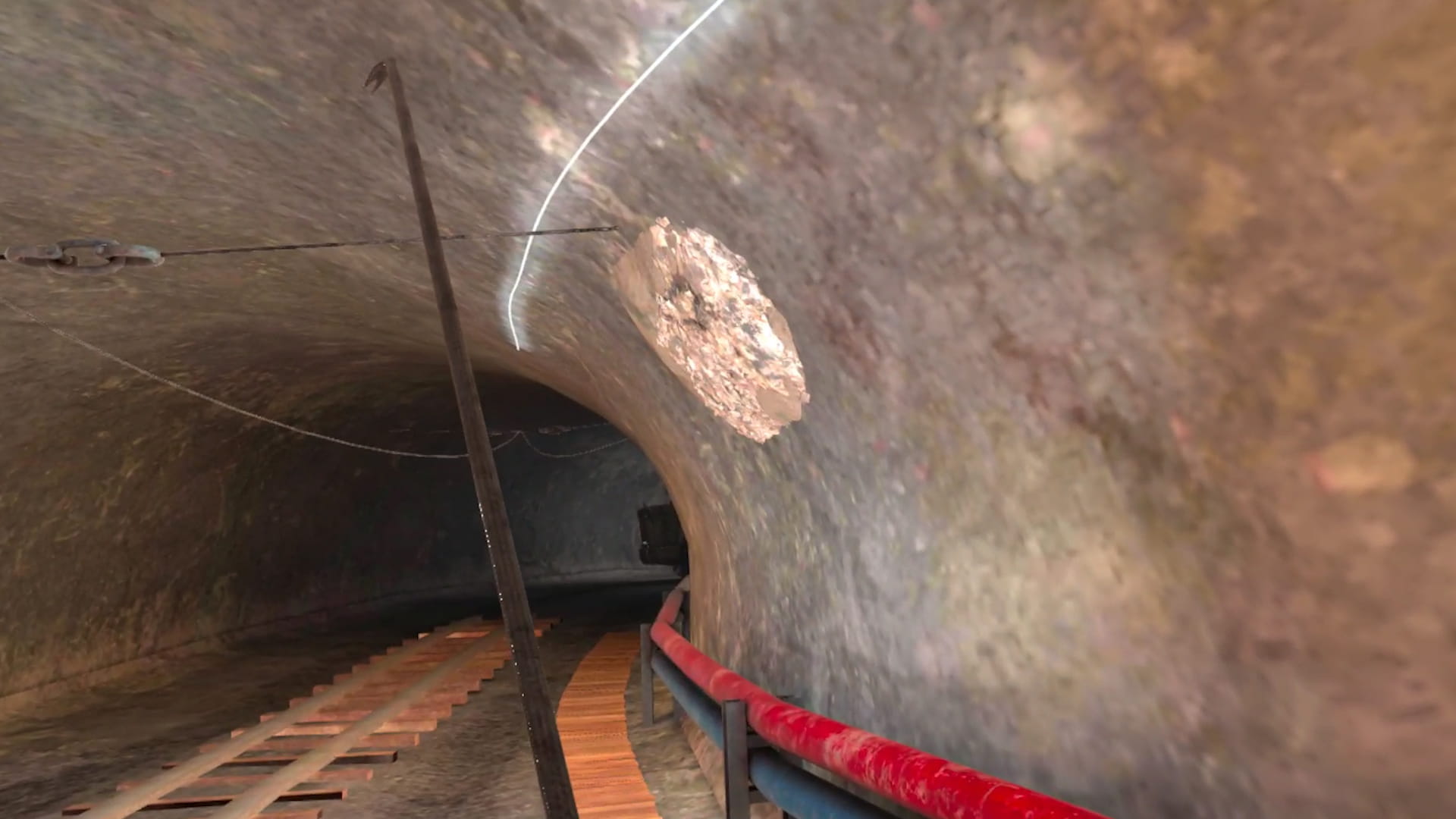
In the VR simulator, you will learn how to identify hazards around a tunnel face after
blasting in mining or tunneling operations. This training will take you underground to
investigate the area and determine whether or not further ground support measures are
necessary, in addition to the ground support application by design. You will use proper tools
and have proper feedback such as sounds, tool actions and cooperation with co-workers. The
training is based on the following standards: NEBOSH, ISO 45001, Standard of Operating
Management System (OMS) for the oil and gas industry by International Association of Oil &
Gas Producers (IOGP).
The VR Experience
The assessment starts underground, in a room with the foreman, who gives you the work permit.
Then you take the rock scaling tool and go out. While proceeding to you workplace you must
find any loose rocks or fall hazards on your way. When you find one, you need to use your
rock tool to eliminate the hazard or ask your co-worker for assistance. You will barricade
the tunnel when you find hazard that you cannot remove yourself. And report this hazard to
the foreman. When you get to the rock face of the tunnel, you will be searching for hazards
with the help of you headlamp, because there is no light in the place of blasting. In the
training and exam mode hazards are randomized to create unique learning experience for the student.
Here's a trailer of how it works
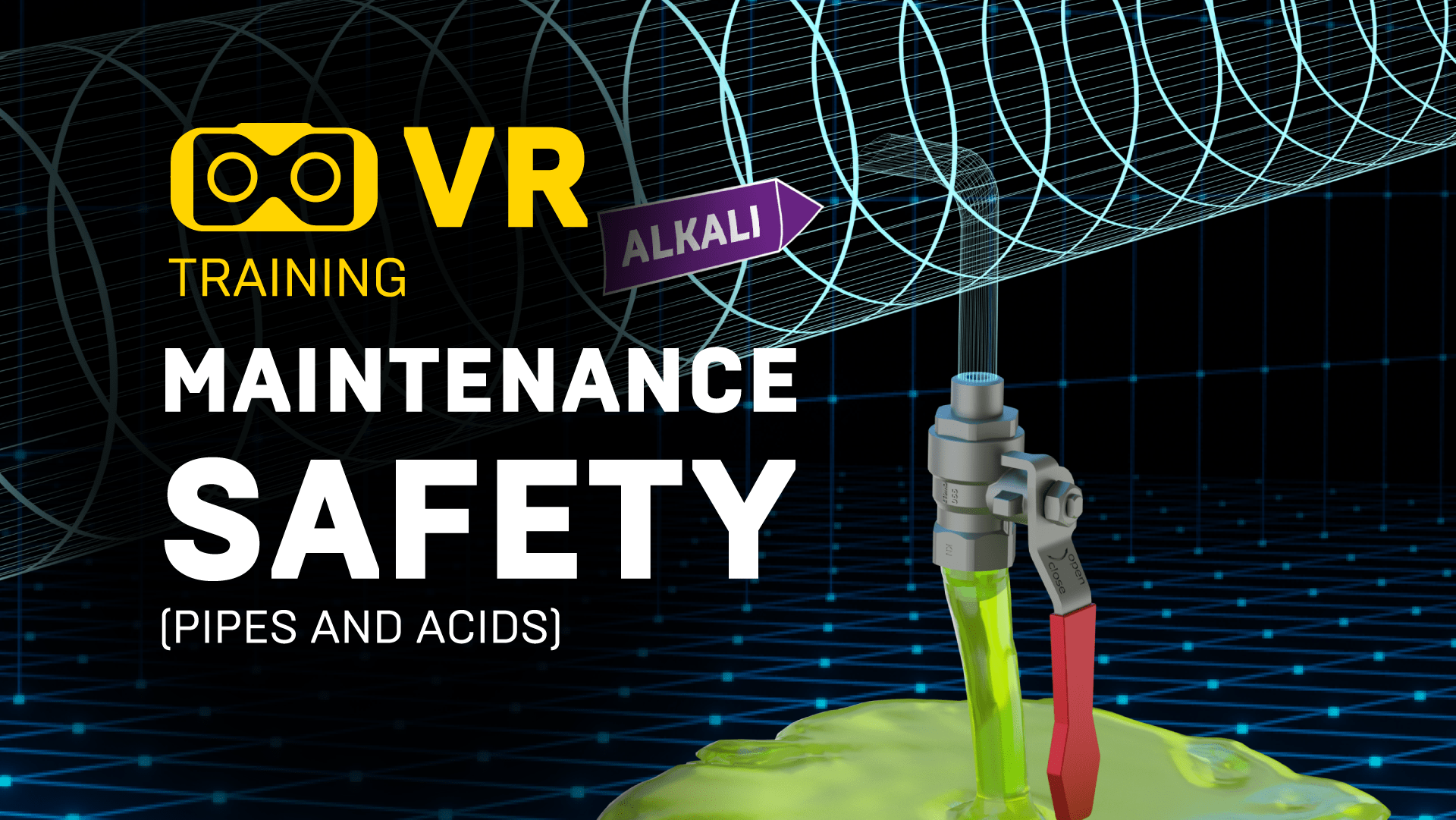

Learn how to prepare the tools
Learn how to prepare the tools, PPEs and safety measures for working on chemical
pipeline, cooperate with your colleagues, read the pipeline schematics, shutdown the
pipeline, lockout tagout valves, wash the pipeline, and provide safety measures around
future maintenance work and much more.
SinglePlayer or Multiplayer
Single Player
Single Player
Category
Workplace Safety, Construction, Workplace Emergency Training
Workplace Safety, Construction, Workplace Emergency Training
Headset Compatible With
HTC Vive Focus 3, Oculus quest 2, Pico Neo 3, PC VR
HTC Vive Focus 3, Oculus quest 2, Pico Neo 3, PC VR
What You'll Learn
In the VR simulator, you will learn how to prepare the tools and safety measures for working
on chemical pipeline, cooperate with your colleagues, read the pipeline schematics, shutdown
the pipeline, lockout tagout valves, wash the pipeline, provide safety measures around future
maintenance work and much more. You will use different tools such as PPEs, communication
devices, valve blockers, pipes, project schematics, pressure gauges and more. The training is
based on the following standards: NEBOSH, ISO 45001, Standard of Operating Management System
(OMS) for the oil and gas industry by International Association of Oil & Gas Producers (IOGP).
The VR Experience
The assessment starts in the control room where you put on different PPEs for protection from
the chemicals used in the pipeline. Then you will get your work permit to start you work. You
will need to read the scheme of the pipes to shutdown proper pumps and close correct valves.
Then you go to the machine room to make manual lockout tagout procedures on the pipes
involved in the maintenance. You will use walkie-talkie to communicate with the control room
and barricade tape to separate maintenance area. After that you will release the residual
pressure in the pipeline, controlling it with the pressure gauges. You will have to wash
chemicals from the floor with the help of water. After that you will go back to the control
room to report the completion of the task.
Here's a trailer of how it works